
This story is part of the Pacific Northwest Economic Growth Report, a collaborative project between the Portland and Puget Sound business journals exploring the strengths and challenges facing the region.
The Pacific Northwest has plenty to offer existing businesses and companies considering a relocation or expansion.
Employers in technology, manufacturing and scientific research can tap into highly educated and skilled workforces. Vibrant startup and investment communities feed innovation in sectors such as clean tech, medical devices and artificial intelligence. Sea-Tac and Portland International Airport enable the movement of goods to worldwide markets. Verdant valleys and a mild, moist climate support globally recognized wine-growing regions.
And we haven’t even mentioned the unmatched natural beauty and outdoor recreational opportunities, which are big selling points for employees.
We asked 9 executives across multiple industries to share their thoughts on the advantages of doing business in the Pacific Northwest and what the region could do to better leverage those strengths. We also asked about the challenges and how best to address them.
Here are lightly edited comments of what they had to say.
Diane Fraiman
Voyager Capital

Title: Managing director
Location: Portland
Diane Fraiman has 40 years experience in the technology industry, working in operations and strategy roles, and since 2007, as an investor. Based in Seattle, with offices in Portland and western Canada, Voyager Capital invests in early stage technology companies and has more than $565 million dollars under management. Fraiman has worked with companies throughout the Northwest including Elemental Technologies (now AWS), Act-On Software, Geoloqi and SheerID.
From a venture capital investment standpoint, what makes the Northwest an attractive region? We really are a center of excellence for so much of the core technology that is critical today. Whether it’s AI or digital transformation or automation or robotics, we are a hub. We’re the epicenter for cloud computing and AI. We’ve got two of the largest public cloud providers sitting in the region. We’ve obviously got incredible research headquarters and institutions. And all of this equals talent. Where there’s talent, there are ideas, where there are ideas, there’s innovation, and those are obviously the type of companies that we want to write checks into. For me, it’s one playground, and the playground being bigger is an advantage.
There’s a cost advantage in the Pacific Northwest, too, right? Well the starting point is money. What you don’t want to do is put money in, miss the milestones, miss the metrics, have to raise more money, and it’s a down round. No one wants a down round. They all want it to go up and to the right. And this is a region where the math works a whole lot better for you than a lot of other places, especially Silicon Valley. So the Pacific Northwest remains attractive to investors. It also remains attractive to entrepreneurs because they don’t have to raise as much.
Do you see the region’s advantages being threatened during this current economic cycle? There are always cycles and from my point of view the current environment is not positive for us. But I’ve always looked at it like there’s three pillars. You’ve got money. You need people like myself who are writing checks, and money follows money just like people follow people. So you’ve got the people with the ideas, and you’ve got money that wants to invest. The third pillar is research institutions. We’ve got some amazing university research institutes that support the ideation, the innovation, the transformation that’s being driven in technology today. Everyone wants to talk about AI, but the reality is before this whole AI revolution it was cloud computing, it was edge computing. It’s why Apple and Google and Meta and Nvidia and all these other (tech companies) have put researchers and engineers into this region. That’s invaluable in terms of what we give to someone who wants to build a company here.
— Suzanne Stevens
Orlando Williams
Motus Recruiting
Title: CEO
Location: Portland
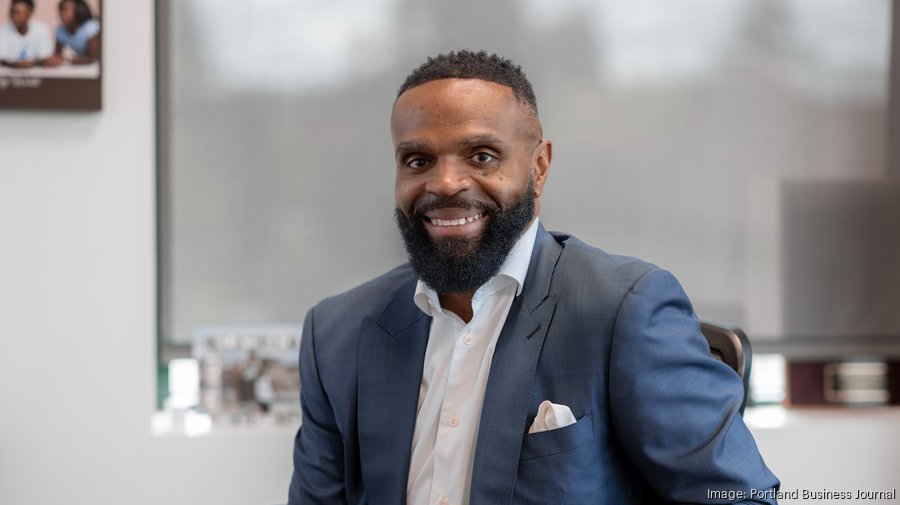
Orlando Williams has a unique view into how the Pacific Northwest’s reputation factors into economic development. Williams’ firm, Motus Recruiting and Staffing Inc., which is celebrating its 20th year, works with private sector clients in health care, transportation, energy, insurance, retail and more, helping them recruit senior-level executives. Motus has also helped elected leaders in Oregon and Washington fill director-level positions, including placing roughly 15 agency directors in Oregon Gov. Tina Kotek’s administration.
What do you hear from potential executive recruits when you talk to them about moving to the region? We’ll start with the positives and that is that many are familiar with our landscape, the outdoors, the foodies, the walkable neighborhoods, those are the draws that bring people in.
And the flipside? These executives are interested in whether or not they will be supported here. Many are innovators and change makers. They want to know if their aggressive or ambitious initiatives will be met with receptive hearts and minds, or will they be fighting battles with regard to the economic and perceived economic and social challenges of the state. Those are always part of the conversation.
Do you think being in Portland or Seattle makes it easier or harder to recruit executives? It’s interesting, because before the pandemic and the social unrest, the questions were common, about cost of living, what neighborhoods to live in, traffic. The normal questions that you would ask a recruiter. Now, we’re getting asked safety and which communities should they consider? What about the downtown area? … And there’s the housing crisis, individuals asking am I going to be paying inflated housing costs? So we’re just answering different questions and more questions now than we have previously.
Is that the case for recruits considering jobs in Washington, too? For us, yes, it’s very similar. Individuals who are relocating from the Midwest or the East Coast are particularly curious about what they’re hearing and reading and whether or not that’s accurate. And considering the political climate, are they coming to an environment that is going to be accepting of maybe their political views? All of those things are now part of the recruitment landscape.
What about particular challenges to doing business here? This may not seem like a business challenge but I feel like the business owners that I’m around take on a sense of civic and philanthropic responsibility for our community. And so there’s always the tension of profits and people in this region, because I have not come across business owners in Oregon and Washington who don’t care deeply about the people and about the communities that they serve.
Anything else you’d like to add? I think I would be remiss if I didn’t talk about what it meant to be a diverse business owner in this marketplace. I think it’s an element that has improved significantly over the last decade, from our state government offices of being able to register a new business to individuals who are committed, like Mayor (Keith) Wilson, to bringing small businesses and minority owned businesses to the city of Portland. We need all businesses in our region to thrive, that makes for a better community. So it is just a reminder to everyone to make sure that we have an inclusive economy, and that when we’re thinking about destination marketing, that we market all businesses in this region.
— Suzanne Stevens
Trevor Wyckoff
Skanska
Title: Executive vice president, general manager
Location: Vancouver
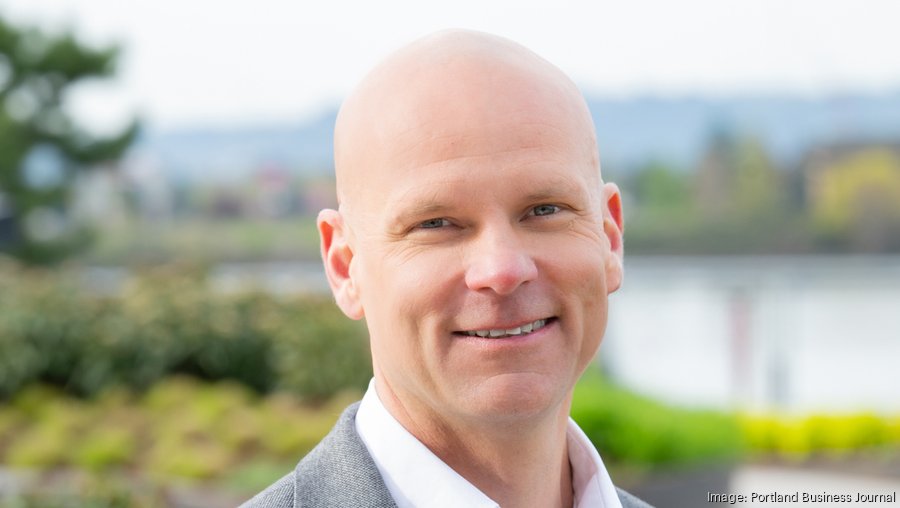
Trevor Wyckoff is a 24-year veteran of construction and development giant Skanska, which has 28 U.S. offices, including in Portland and Seattle. The company works with clients in an array of industries, including energy, health care, transportation, commercial and sports. In his current role, Wyckoff oversees building operations in Oregon and Southwest Washington. He’s a Portland native but has lived just across the river in Vancouver for most of his adult life, giving him a unique perspective about the advantages of living and working in the Pacific Northwest.
What are the advantages for Skanska doing business throughout the Pacific Northwest? We have shared clients, and we have an awful lot of collaboration between offices so that we are able to leverage each office’s expertise and relationships. And Portland and Seattle can be similar in what’s happening economically. We share that information with one another so we can set ourselves up for success and inform clients about trends.
Big picture, what are the advantages of doing business in the region? There are highly skilled and highly talented people that live in the region, for a lot of different industries. Then there’s the culture here and everything that’s available to us from an outdoors perspective, things to do in the city. It’s a good place to live.
And the disadvantages? Taxes are a disadvantage. Also, I don’t believe we are the worst from a permitting standpoint, but I do know that other large cities have more streamlined processes from a permitting and entitlement standpoint. Also, the perception of Portland and Seattle has not been positive for the past five or six years. There’s still work to be done from a safety, security and cleanup perspective, but it’s not nearly as bad as the perception.
What would you say to other executives considering a move or an expansion here? I would say it’s a great time to invest in Portland. People can get tremendous value right now. Ten years from now, that might not be the case. I don’t think there will be the same deals. In my opinion, all of the advantages that this area has, the nature, the resources, you can’t keep that hidden.
— Suzanne Stevens
Jenna L. Mooney
Davis Wright Tremaine LLP

Title: Partner, Executive Operations Manager
Location: Portland
Jenna Mooney has spent her entire legal career at Davis Wright Tremaine LLP. Based in Portland, Mooney has served in various leadership roles. Last December, she was appointed to the new position of firm-wide executive operations partner. In her legal practice, Mooney helps client employers proactively manage employees to ensure legal compliance. DWT is the second-largest firm in Seattle, with 230 attorneys, and fifth largest in Portland, where it has 68 attorneys. Founded in Seattle in 1908, DWT has 11 offices across the U.S.
How important is a Pacific Northwest presence for your firm overall? We view the Northwest as being a key part of our market share. We’re still growing in the Northwest and other major markets we sit in. We continue to see the Northwest as a place where the best and brightest want to innovate. The people drawn to the Northwest are generally adventurous spirit people, who want to be creative and live in a beautiful place. I see there continuing to be a wealth of opportunity in the Northwest, and there’s nice alignment with the industries we serve. Many that we serve — technology, health care, clean energy, food and beverage — are thriving in the Northwest, so we continue to attract talent to those industries specifically.
How do you leverage those advantages to attract employees? I’d like to think we’re attracting people because we’re doing interesting, exciting work for clients of the same character and you get to live in Portland or Seattle. How I sell it is the excellence of the work we’re doing for clients who are innovative and doing big things, and there’s the added benefit of living in a beautiful place with a shared philosophy. Seattle and Portland are similar in their ethos.
Is DWT committed to the two downtowns? I’m downtown three days a week. It feels good to be back downtown. The firm certainly invested there — we’re in a relatively new lease in downtown and finalizing our space in Seattle, and there’s no question we’ll continue to be downtown. We moved to (Block 216), we expanded our footprint and love it. The space is beautiful. Flock (a food court) opened and it’s great to have that nearby.
— Elizabeth Hayes
Dietrich Wieland
Mackenzie, Greater Portland Inc.
Title: President, board chair
Location: Portland
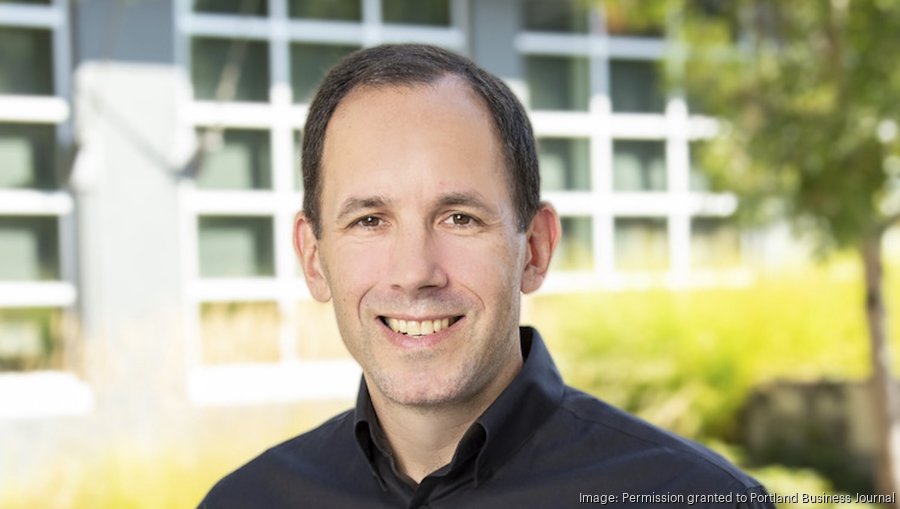
Dietrich Wieland has been with the architectural design firm Mackenzie for nearly three decades. Based in Portland, Mackenzie works with clients in industrial, office, retail, multifamily, education and more, providing civil and structural engineering, transportation planning and interiors. The company’s roots are in the Pacific Northwest but it does work nationwide and recently opened a Sacramento office. Wieland is also board chair for Greater Portland Inc., a public-private agency that promotes the region as a competitive place for business investment.
What are some economic development projects worth celebrating? There’s been broad public support for things outside of what I call traditional economic development wins. Portland is getting two concert venues. Those are massive and great economic development generators. The James Beard market is getting public support and public dollars. The WNBA coming to Portland, FIFA the World Cup coming to Seattle, these are massive economic development opportunities. There are a lot of good examples that we need to be focusing on.
Could we be doing more to trumpet these “wins”? I would say, yes, definitely. Every region in every city has its challenges. We’re not an exception. I think we should focus on the positives while we work on the negatives. I think, especially when you’re talking to someone outside of our region, we’re the region’s ambassadors. Let’s focus on those positive things.
You work in commercial real estate. What would you say to someone in your field who’s thinking of expanding or investing here? If I were talking to someone that was thinking of moving to the Portland area, and this probably applies to Puget Sound as well, and they say “I’m thinking about leasing space in the downtown core, but I’ve seen all this bad news about buildings being foreclosed on,” I would say there’s the negative and the positive. As we come out of that, what’s wonderful about it is it’s resetting the basis for rents. I know for us personally, and in our conversations with building owners and the brokerage community, their volume of conversation is really, really high now. Despite some of those (buildings) changing hands, those are just things that have to happen, but it resets the table for values to be had. That combined with a city that’s working on removing (development) barriers is an encouraging sign.
GPI recently hosted a site selection team from Deloitte that held its annual retreat in Portland. What was your takeaway from that? One of the things that resonated with me was that they very clearly said “You guys are competitive. You’re highly competitive on the West Coast, but you need to think about how you see yourself competitively nationally.” My takeaway from that was are we really behaving that way, with some swagger. Are we playing small ball? Should we be playing a little bit bigger? I think we can be more aggressive in touting what we do well and what we can lean into versus other regions.”
— Suzanne Stevens
Pleschette Fontenet
Lenovo

Title: Regional sales director
Location: Portland
Pleschette Fontenet moved to Portland from Austin in 2015, transferring for her job as an account representative for Dell. In 2019 she made the leap to Lenovo. As regional sales director, Fontenet leads a sales team selling technology to K-12 school districts with a cumulative enrollment of 10.2 million students in Washington, Oregon, California, Nevada, Idaho, Montana, Wyoming, Utah and Arizona. She is on the board of Friends of the Columbia Gorge and is president of the Junior League of Portland.
You’ve been in Portland for a decade and work in sales. Was is difficult to establish yourself here professionally? Relationship-driven business is core here. I’ve kind of put my tentacles out in the city in terms of community connections and volunteering. Community events is how I tend to network, and I really do a lot of nonprofit work in my spare time. It really does enable me to cultivate relationships outside of my industry and get a lens of perspective on what other people are contending with in their businesses. It’s just being diligent and intentional and getting out.
What are some issues the region should address to attract more businesses? Well, our taxes are high. I think increased transparency about where our tax dollars are going would serve as an attraction. I think focusing on downtown vibrancy would help, giving modified tax breaks to employers that really want to be here and bolster the economy. Getting more conventions here and big events. I had people come from North Carolina, where my company is headquartered, for the Portland Marathon. I took them around and they’re like, “Wow, this place is so beautiful.” I think leaning into highlighting how beautiful this place is and how authentic the people are. There are so many do-gooders in this town.
What do you mean by that? I’m not an anomaly in having a corporate job and doing nonprofit work. Sometimes my nonprofit work eclipses my corporate obligations. Highlighting the community service and the good work that citizens do could be attractive.
— Suzanne Stevens
Tom Tongue
Schwabe

Title: CEO
Location: Portland
Schwabe is one of the largest law firms in the Portland area with a significant Seattle presence, as well. It specializes in a wide range of legal services with about 160 attorneys firmwide. Tom Tongue, a fifth-generation Oregon attorney, took over when Graciela Gomez Cowger stepped down as CEO in October. Tongue has been with Schwabe his entire career, practicing business law.
How important is a Pacific Northwest presence for your firm overall? Schwabe was founded in the Pacific Northwest over 130 years ago, and our commitment to this region is integral to our identity. Our offices in Oregon, Washington, Alaska, and California are not just locations on a map; they are deeply integrated into the business communities we serve. Our dedication to this region enables us to provide targeted, industry-specific legal counsel that genuinely understands the nuances of operating and thriving in the Pacific Northwest.
Big picture, what are the advantages of doing business in the region? And the challenges? The Pacific Northwest presents a wealth of unique opportunities. Our region is a hub for key industries that drive both the local and global economies, including technology, manufacturing, real estate, and healthcare. We have a powerful culture of entrepreneurship and innovation, complemented by a robust port system that serves as a critical gateway for international trade. However, we must also acknowledge the challenges that lie ahead. There is a growing recognition that tax policies and regulatory burdens on our business community have hurt the region’s competitiveness. Ensuring the Pacific Northwest remains an affordable and competitive place to start and sustain a business is essential for our long-term economic health and competitiveness. Our firm is dedicated to helping our clients navigate these complexities to secure their success.
What would you say to someone in your field who is thinking of expanding or investing here? I would dispel the stories reported in the national press suggesting that this region is unsafe or unstable. The Pacific Northwest has, and continues to, offer an incredible quality of life and is in the early stages of an economic rebound. While our region faces challenges, I am confident that we will address these issues and unlock our next wave of growth and development. In short, this is a great time to invest in the Pacific Northwest.
Do you see the region’s advantages being threatened during this current economic cycle? Our long-term regional advantages remain intact; however, in the short term, we have been impacted by COVID-19, social unrest, inflationary pressures, tax policies, and a heavy regulatory environment. There is a growing acknowledgement that we need to innovate and evolve. I remain confident we will address the issues that have impacted our economy and communities. One of our region’s greatest strengths rests in its resiliency. I see it firsthand in the companies we represent – they are innovating, adapting, and finding creative pathways to grow and overcome headwinds.
— Cathy Duchamp
Kent Craford
SeaPort Airlines
Location: Portland
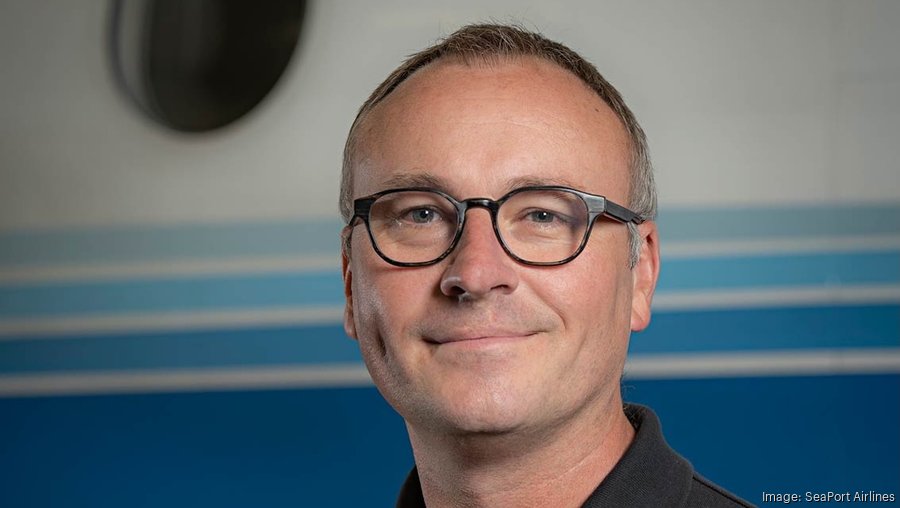
In May, SeaPort Airlines relaunched daily service between Seattle and Portland, in a bid to serve businesses that work in both cities but are tired of traffic snarls along Interstate 5. SeaPort, a carrier under a group of regional airlines, launched a similar route in 2008, but the service was later nixed after the company went bankrupt in 2016. For Kent Craford, the CEO, the route’s return has been a long time coming for Pacific Northwest executives like him who have spent decades doing business along the Cascadia corridor.
How important is a Pacific Northwest presence for your firm overall? The Pacific Northwest is a small but growing market for our family of regional airlines. It’s personally important to me because I live in Portland, and went to school and started my career in Puget Sound.
Big picture, what are the advantages of doing business in the region? And the challenges? As it relates to our industry, transportation, the advantages are the short distances between major urban areas and the deep aviation roots and talent pool–we operate from “Boeing Field,” after all. The biggest challenge is how deeply unserious Pacific Northwest policymakers are about the region’s metastasizing transportation problems like the rolling blackout that is SeaTac airport. What are they doing about our region’s largest–clearly struggling–airport? Washdot is spending $49 million to “vision” high speed rail, which will take 30 years, cost half a trillion dollars, bisect countless wildlife corridors and spew more concrete-related carbon into the atmosphere than the eruption of Krakatoa. At least we have P.F. Changs at the airport now, while we wait…
What would you say to someone in your field who’s thinking of expanding or investing here? Be well capitalized, be prepared to lose (er…invest) a lot for a long time, play the long game, be maniacal about your product quality, and differentiate yourself. The Northwest is an expensive place to operate any kind of transportation.
Do you see the region’s advantages being threatened during this current economic cycle? Yes. The Pacific Northwest economy has become increasingly reliant on government spending, especially in Oregon, and as the liquidity of the Covid era tightens, there will be an adjustment. Diversification is key, and tapping into new markets around the region is a huge opportunity to diversify. That’s what we’re here for—we make Seattle and Portland next door again. Down and back the same day? You bet. It’s easy, fast and no hassles. SeaPort is expanding our customers’ reach so they’re effectively co-located, without having to be co-located.
— Nick Pasion
Gregory Kovsky
IBA (International Business Associates)

What’s your outlook for hiring? “When I graduated from college, everyone wanted to go to work for the biggest, baddest companies. The younger generation wants to be founders. They want to be entrepreneurs. We are seeing a whole tide change where people don’t want to go to work for a company. They want to create and build.”
How are AI tools being implemented at your firm to spur growth? “Superficial knowledge is really dangerous. But on the other side, as far as market research in our industry, rather than having to read 18 websites, it can lead you in the right direction and definitely make it more efficient. And I will compliment Puget Sound Business Journal and your sister (publication), the Portland Business Journal, which we are also involved with. There’s no substitute for the local knowledge you provide, and if you weren’t out there reporting, it wouldn’t exist in many cases.”
How do you ensure you are developing new leaders as you scale and expand into new markets? At IBA, I have many wonderful people who get delegated, whether it’s brokers who are leaders in different industry segments, who carry our brand and do transactional work there.
This article first appeared in the Portland Business Journal on November 25, 2025.
This article summarizes aspects of the law and does not constitute legal advice. For legal advice for your situation, you should contact an attorney.
Sign up